
2.2 Subject, procedure, protocol, and follow-up
2.2.1. Subject
A subject represents one participant included in the database.
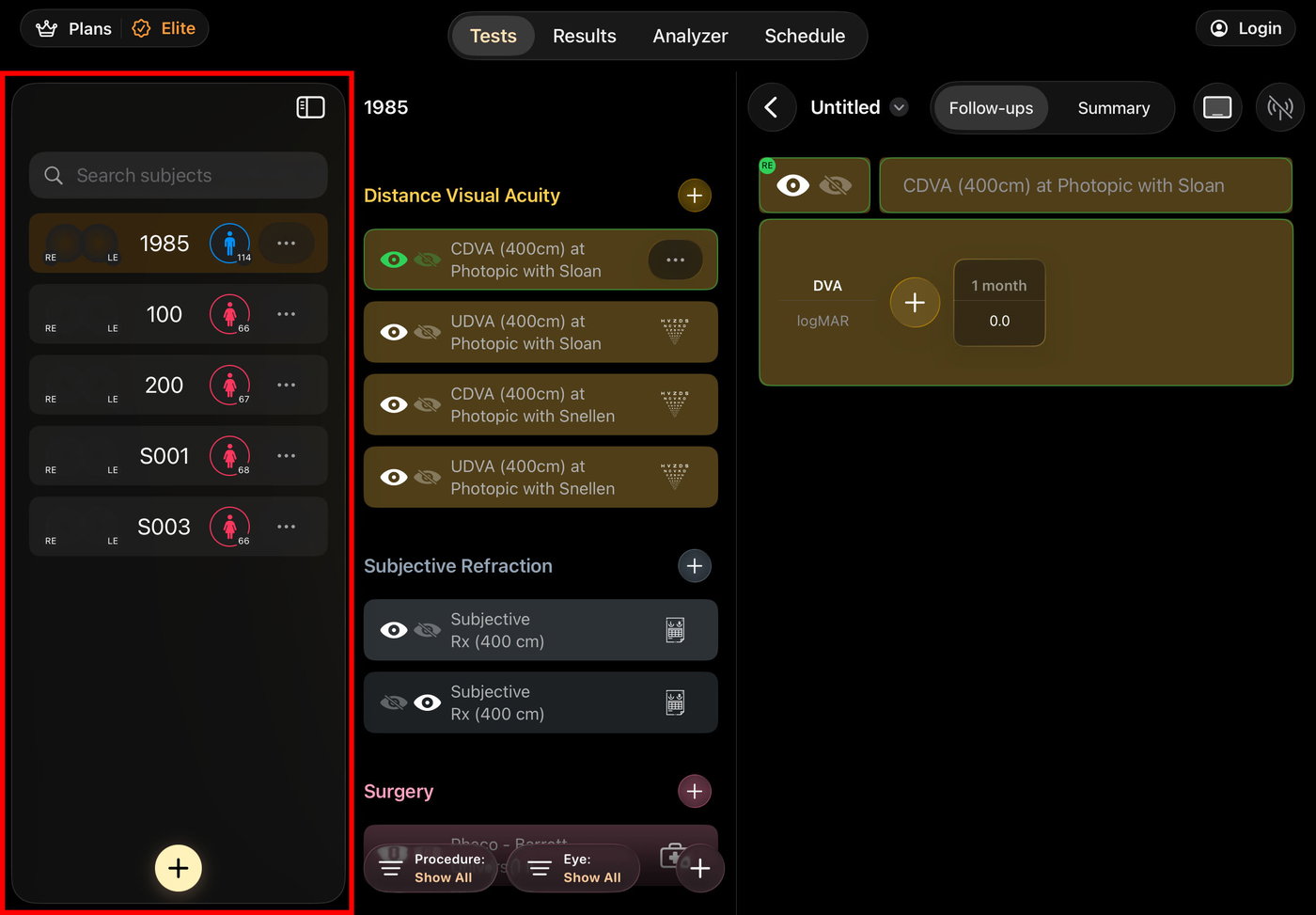
Each subject should be identified using a numeric pseudo-ID. The subject record may also contain:
Sex.
Year of birth.
Optional only for IOL procedures, not required in Contact Lenses or Laser Refractive Surgery:
Intraocular lens implanted in the right eye
Intraocular lens implanted in the left eye.
Create one subject record per participant. Do not create a new subject for each visit. Repeated visits and measurements are stored as follow-ups within the same subject record.
2.2.2. Procedure (by Protocol)
A procedure defines what will be measured or which data will be collected.
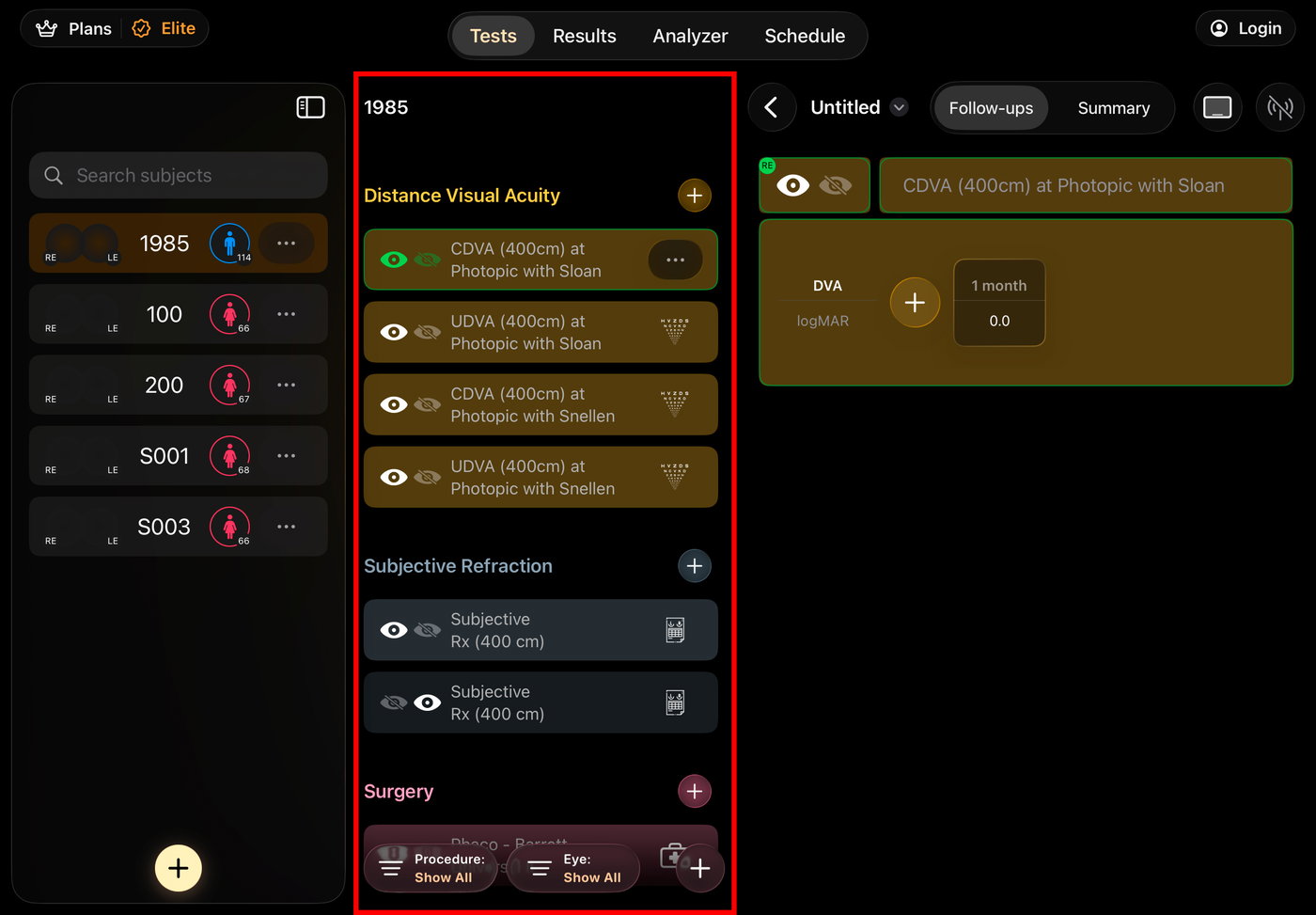
Examples include:
Biometry
Surgery Data
Subjective Refraction.
Distance Visual Acuity.
Intermediate Visual Acuity.
Near Visual Acuity.
Visual Acuity Defocus Curve.
Contrast Sensitivity.
Stereopsis.
…
A subject can have several procedures. Depending on the test, a procedure may be assigned to the right eye, the left eye, or both eyes.
Protocol
A protocol defines how a procedure will be performed.
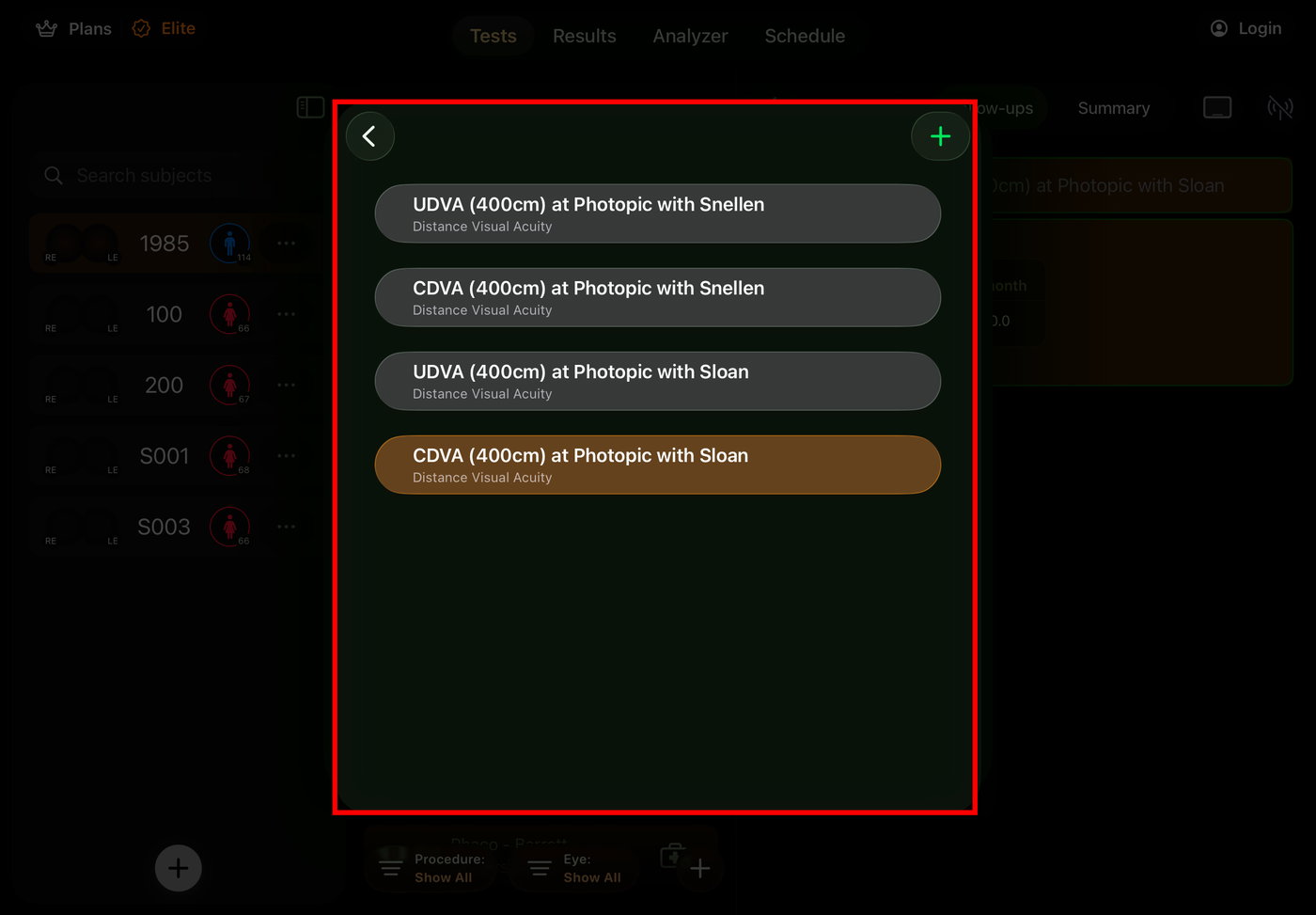
It may specify:
Display calibration profile.
Presentation distance.
Mirror configuration (only for cabins which work with a mirror to virtually double the distance)
Luminance condition.
Optotype or stimulus.
Refractive correction condition.
Addition for the presentation distance.
Measurement method.
Defocus range or spatial frequencies.
…
Protocols are reusable. Once a protocol has been created, it can be assigned to the same procedure for different subjects and follow-ups.
This supports measurement standardisation. If all investigators use the same protocol, the procedure is more likely to be performed under consistent conditions.
Standardisation note
A protocol should describe a repeatable testing setup, not the circumstances of one individual subject. Create a separate protocol whenever a relevant measurement condition changes.
2.2.3. Follow-up
A follow-up identifies when a procedure was performed.
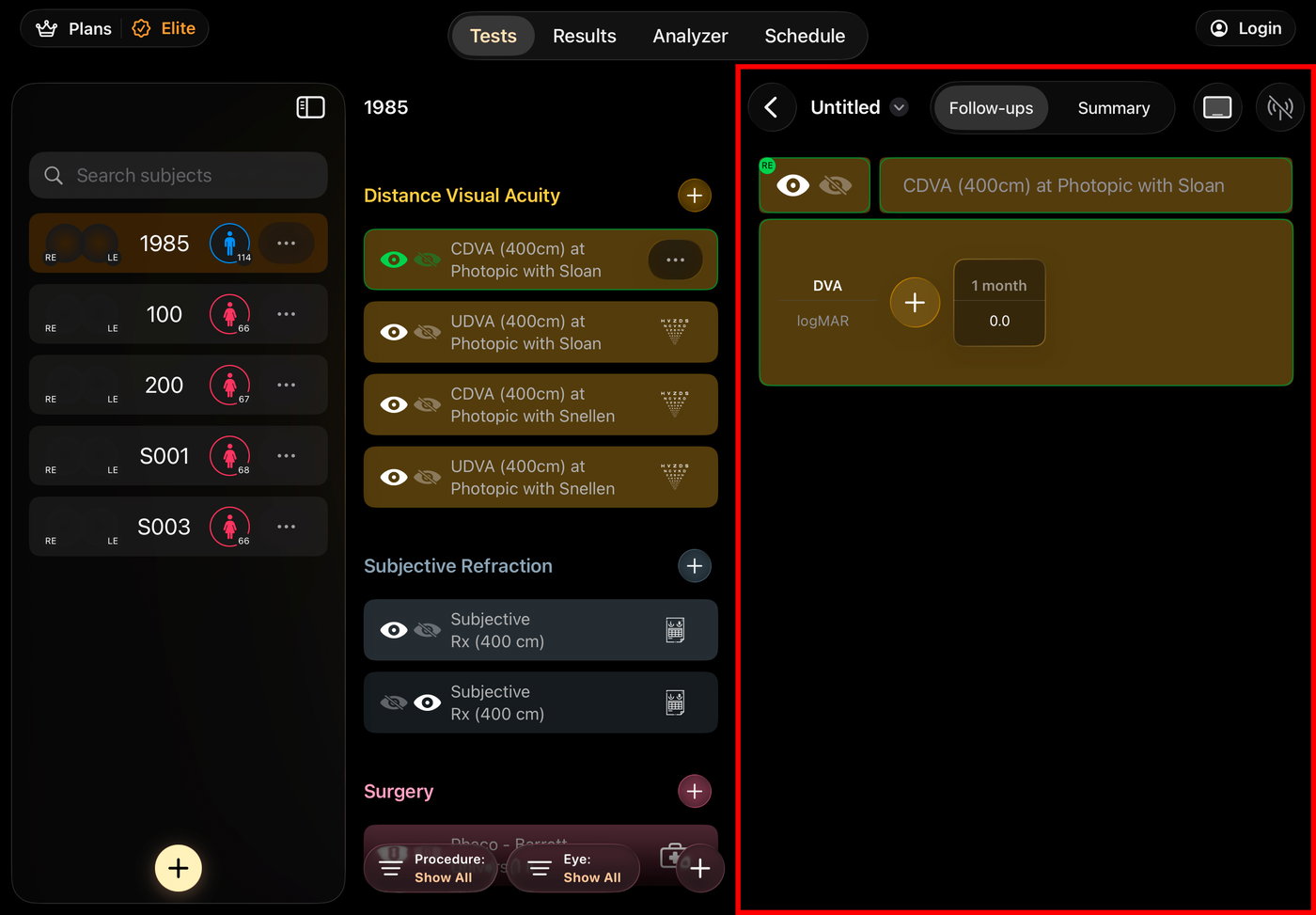
Examples may include:
Preoperative.
Surgery.
First day.
First week.
1 month.
3 months.
6 months.
12 months.
More than 12 months.
Undefined or a custom timepoint.
The same procedure can be evaluated at several follow-ups. This makes it possible to compare results over time without duplicating the subject or procedure.
2.2.4. Result or Collected Data
A result is the value obtained when the procedure is completed at a particular follow-up. The results can be directly obtained from testing measurements or it can require that the researcher insert the values such as in the case of biometry, surgery or subjective refraction.
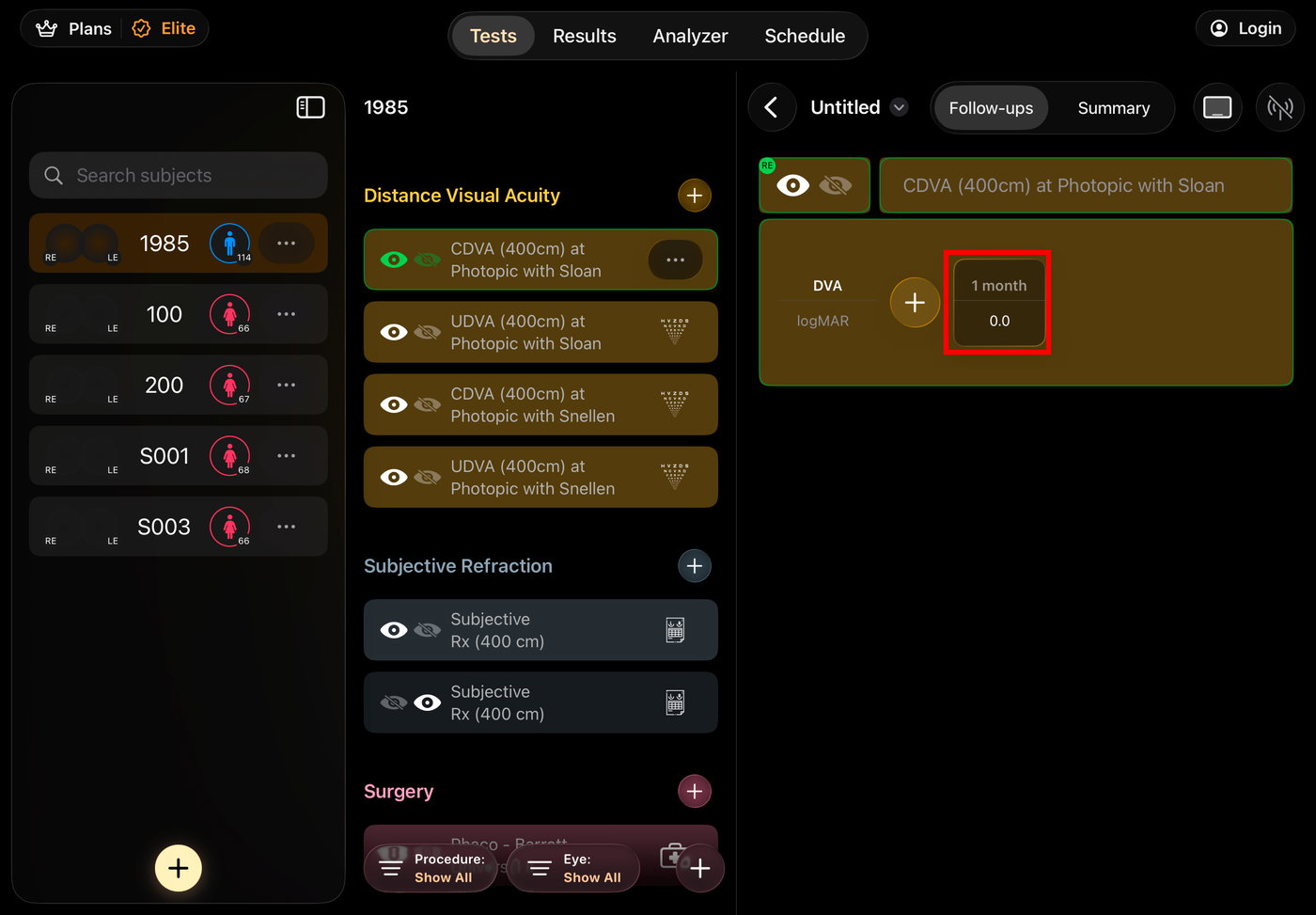
For example:
Sphere, cylinder, and axis for subjective refraction. (Entry data)
Visual acuity in logMAR. (Data measured)
Contrast sensitivity at each spatial frequency. (Data measured)
Visual acuity at each defocus level. (Data measured)
Stereopsis threshold in arc seconds. (Data measured)
Every result should therefore be connected to the correct database, subject, eye, procedure, protocol, and follow-up.